

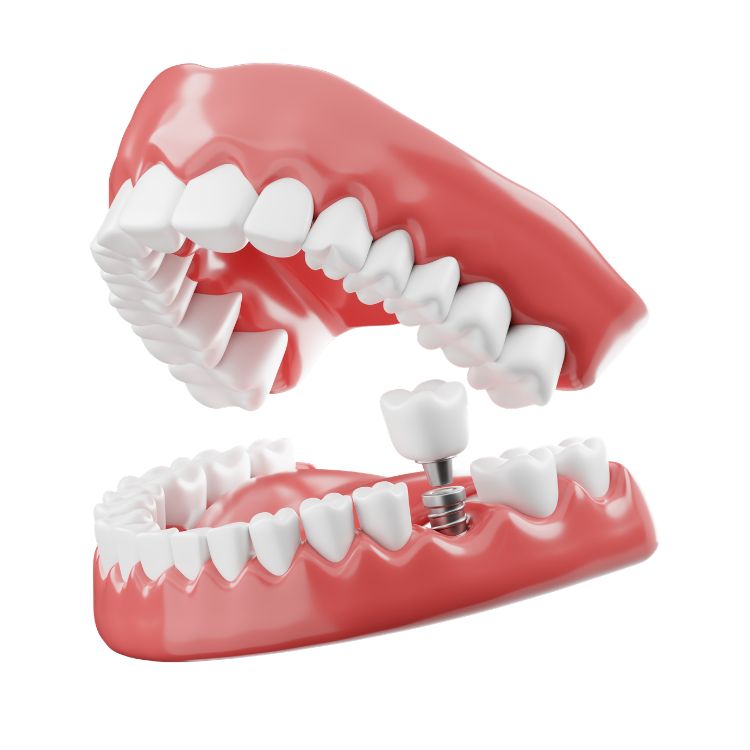
A dental implant is a small titanium post that’s placed into the jawbone where a tooth is missing. Once the post fuses with the bone (a natural process called osseointegration), it becomes a permanent anchor for a custom-made crown, bridge, or denture.
The result is a replacement tooth that looks, feels, and functions like the one you lost. You can chew, speak, laugh, and smile with full confidence. Unlike dentures, implants don’t slip or shift. Unlike bridges, they don’t require altering the healthy teeth next to the gap. An implant stands on its own, supported by the same jawbone that held your natural tooth.
Dental implants have been used successfully for decades and have a success rate above 95%. For most patients with one or more missing teeth, implants are the gold standard for permanent tooth replacement.
Why You Shouldn’t Leave a Gap in Your Smile
A missing tooth isn’t just a cosmetic issue. Leaving a gap in your smile sets off a chain of problems that gets worse over time.
The teeth next to the gap begin to shift and tilt into the open space, changing your bite and creating alignment issues. The tooth above or below the gap (the opposing tooth) can start to drift out of its socket since there’s nothing to bite against. These shifts can lead to uneven wear, jaw pain, and difficulty chewing.
Bone loss is the other major concern. Your jawbone stays strong because the roots of your teeth stimulate it every time you chew. When a tooth is missing, that stimulation stops, and the bone in that area begins to shrink. Over the first year after losing a tooth, you can lose up to 25% of the bone width in that area. Over time, this bone loss can change the shape of your face, making you look older than you are.
Dental implants are the only tooth replacement option that preserves the jawbone. Because the titanium post integrates with the bone and transfers chewing forces just like a natural root, it keeps the bone healthy and prevents the deterioration that comes with a gap, a bridge, or a denture.
Dental Implant Options
Every patient’s situation is different. The number of missing teeth, the health of your jawbone, and your long-term goals all factor into which implant approach is right for you.
Single tooth implant. One titanium post topped with one custom crown. This is the most common implant procedure and is ideal for replacing a single missing tooth anywhere in the mouth. The implant stands independently without affecting the neighboring teeth.
Implant-supported bridge. When two or more adjacent teeth are missing, an implant-supported bridge may be the best solution. Instead of placing an individual implant for each missing tooth, two implants are placed at either end of the gap and a bridge of connected crowns spans the space between them. This approach replaces multiple teeth efficiently while preserving bone.
Implant-supported dentures (All-on-4 / All-on-6). For patients missing most or all of their teeth, a full arch of replacement teeth can be secured to four or six strategically placed implants. This eliminates the slipping, adhesives, and discomfort associated with traditional dentures. The result is a stable, permanent set of teeth that looks natural and lets you eat whatever you want.
Mini implants. Smaller in diameter than standard implants, mini implants can be used in situations where bone volume is limited or as a way to stabilize an existing lower denture. They require a less invasive placement procedure and can sometimes be loaded with a restoration the same day.
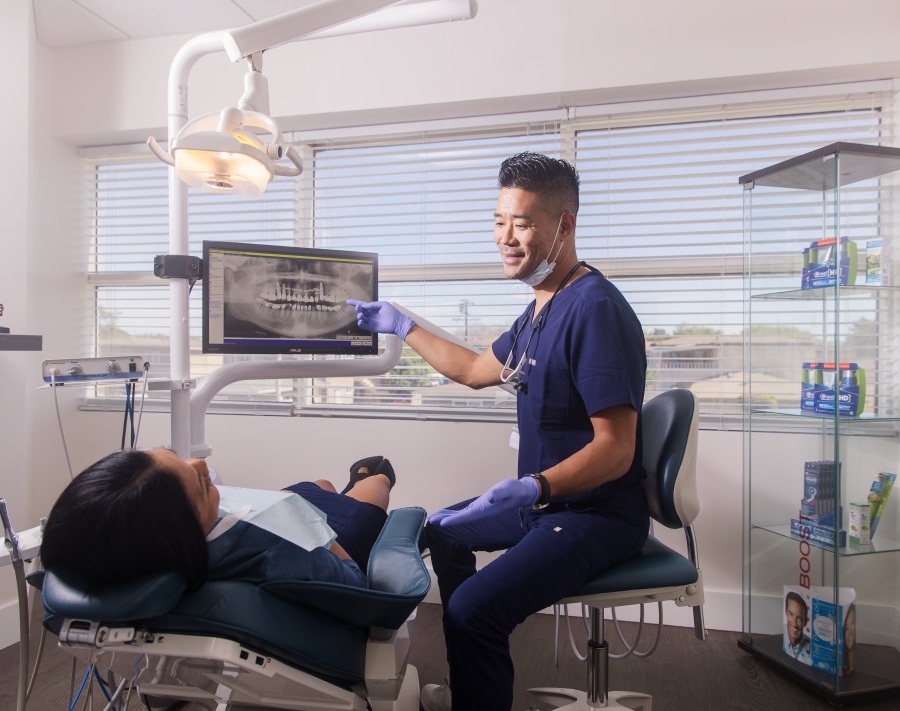
During your consultation, we’ll take X-rays and evaluate your bone density, gum health, and overall oral condition to recommend the approach that gives you the best long-term result.

Am I a Good Candidate for Dental Implants?
Most adults with one or more missing teeth are candidates for dental implants. The key requirements are adequate jawbone density to support the implant, healthy gums, and good overall health.
There are some factors that may require additional steps before implant placement. If you’ve been missing a tooth for a long time and bone loss has occurred, a bone graft can rebuild the area to support an implant. Gum disease needs to be treated and under control before an implant is placed. Smokers can receive implants, but smoking slows healing and increases the risk of implant failure, so your dentist may recommend a cessation plan before and after surgery. Certain medical conditions like uncontrolled diabetes or autoimmune disorders may require coordination with your physician.
Age is generally not a barrier. We’ve placed implants for patients in their 70s and 80s who are in good health. The main factor is whether your jawbone and overall health can support the procedure.
The best way to find out if implants are right for you is to come in for a consultation. We’ll evaluate your specific situation and give you an honest recommendation.
Dental Implants vs. Bridges vs. Dentures
If you’re missing teeth, you have three main replacement options. Each has its place, and the right choice depends on your situation.
Dental implants are the most permanent solution. They replace the root and the crown, preserve jawbone, and don’t require any alteration to surrounding teeth. With proper care, an implant can last a lifetime. The tradeoff is a longer treatment timeline (several months) and a higher upfront cost.
Dental bridges are a solid, non-surgical option for replacing one to a few missing teeth. They’re faster to complete (typically two visits) and cost less upfront than implants. The tradeoff is that the teeth on either side of the gap need to be crowned to anchor the bridge, even if those teeth are healthy. Bridges also don’t prevent bone loss in the area where the tooth is missing, and they typically last 7 to 15 years before needing replacement.
Dentures (removable) can replace several teeth or a full arch. They’re the most affordable option upfront and don’t require surgery. The tradeoffs include a less secure fit (especially lower dentures), the need for adhesives, potential discomfort, dietary restrictions, and ongoing bone loss over time. Implant-supported dentures solve many of these issues by anchoring the denture to implant posts.
There’s no single right answer for everyone. During your consultation, we’ll walk you through the pros and cons of each option based on your specific teeth, bone, health, and goals.
Frequently Asked Questions
Find answers to commonly asked questions about Dental Crowns and Bridges.